
• Contact Us
  • Subscribe Us
  • Unsubscribe
  • Home
  • News
  • Entertainment
  • Fashion
  • Gadgets
  • Technology
No Result
View All Result
Technology Event Hub
No Result
View All Result
Home Uncategorized

Hubble telescope spots stunning ‘Hidden Galaxy’ hiding behind our own Milky Way

admin by admin
May 30, 2022
in Uncategorized
0

Behold the “Hidden Galaxy” coming into view.

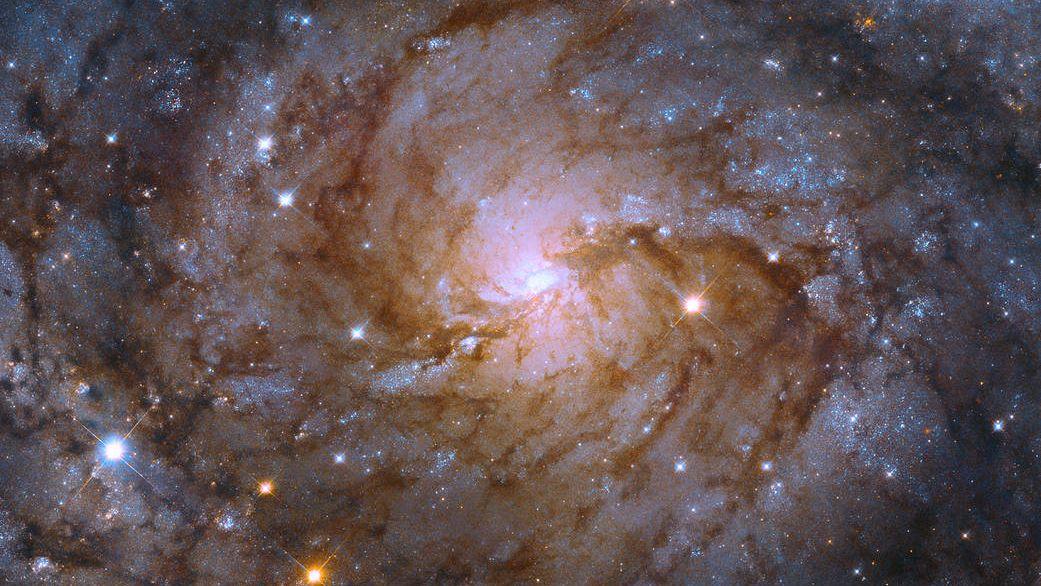
This glorious Hubble Space Telescope image showcases spiral galaxy IC 342, also known as Caldwell 5. No matter what you call this galaxy, scientists have had some difficulty observing it due to obstacles in the way, earning it its “hidden” nickname, according to NASA.

“It appears near the equator of the Milky Way’s pearly disk, which is crowded with thick cosmic gas, dark dust, and glowing stars that all obscure our view,” NASA wrote in a May 11 statement (opens in new tab).

Hubble can peer through the debris, to an extent, as the telescope does have infrared capabilities. Infrared light is less scattered by dust and allows a clearer view of the galaxy in behind the interstellar matter.

“This sparkling, face-on view of the center of the galaxy displays intertwined tendrils of dust in spectacular arms that wrap around a brilliant core of hot gas and stars,” NASA wrote of the picture.

“This core is a specific type of region called an H II nucleus — an area of atomic hydrogen that has become ionized. Such regions are energetic birthplaces of stars where thousands of stars can form over a couple million years.”

Related stories: — The Hubble Space Telescope and 30 years that transformed our view of the universe — See the first photos from the Hubble Space Telescope after a major computer malfunction — Hubble captures a ‘Cosmic Reef’ in stunning 30th anniversary image

The blue stars ionize or energize the hydrogen surrounding their birthplaces due to emitting ultraviolet light, NASA said. The galaxy would be one of the brightest galaxies in our sky if there was not so much dust in the way.

IC 342 is also relatively close in galactic terms, only 11 million light-years from Earth. It’s about half the diameter of our own Milky Way (50,000 light-years across), making it relatively large, too.

Hubble has been in space for a generation and has photographed this galaxy several times before. You can also spot its imaging of IC 342 in 2017 (opens in new tab) and 2010 (opens in new tab).

Follow Elizabeth Howell on Twitter @howellspace (opens in new tab). Follow us on Twitter @Spacedotcom (opens in new tab) or Facebook.

[Read More…]

Previous Post

Recent ‘realityOS’ trademarks hint at Apple moving closer to AR/VR headset announcement

Next Post

1st look: NASA visitor complex to open ‘Gateway’ to future of space travel

admin

admin

Next Post

1st look: NASA visitor complex to open 'Gateway' to future of space travel

Search

No Result
View All Result

Subscribe Us

By clicking submit, I authorize Technology Event Hub and its affiliated companies to: (1) use, sell, and share my information for marketing purposes, including cross-context behavioral advertising, as described in our Terms of Service and Privacy Policy, (2) supplement the information that I provide with additional information lawfully obtained from other sources, like demographic data from public sources, interests inferred from web page views, or other data relevant to what might interest me, like past purchase or location data, (3) contact me or enable others to contact me by email with offers for goods and services from any category at the email address provided, and (4) retain my information while I am engaging with marketing messages that I receive and for a reasonable amount of time thereafter. I understand I can opt out at any time through an email that I receive, or by clicking here

MOST POPULAR

Inside arXiv—the Most Transformative Platform in All of Science

16-inch MacBook Pro review: More speed and more screens

Skimming device in Orem store for more than a month

The Rise of the Fashion Sharing Economy

How The ‘80s Are Influencing 2023 Style Trends

Where to travel in 2023, based on your zodiac sign

Load More
  • Subscribe Us
  • Contact Us
  • Privacy Policy
  • Terms Of Service
  • Unsubscribe
  • Privacy Choices

© 2026 Technology Event Hub, - All Rights Reserved.

No Result
View All Result
  • Home
  • News
  • Entertainment
  • Fashion
  • Gadgets
  • Technology

© 2026 Technology Event Hub, - All Rights Reserved.

Skip to content
Open toolbar Accessibility Tools

Accessibility Tools

  • Increase TextIncrease Text
  • Decrease TextDecrease Text
  • GrayscaleGrayscale
  • High ContrastHigh Contrast
  • Negative ContrastNegative Contrast
  • Light BackgroundLight Background
  • Links UnderlineLinks Underline
  • Readable FontReadable Font
  • Reset Reset